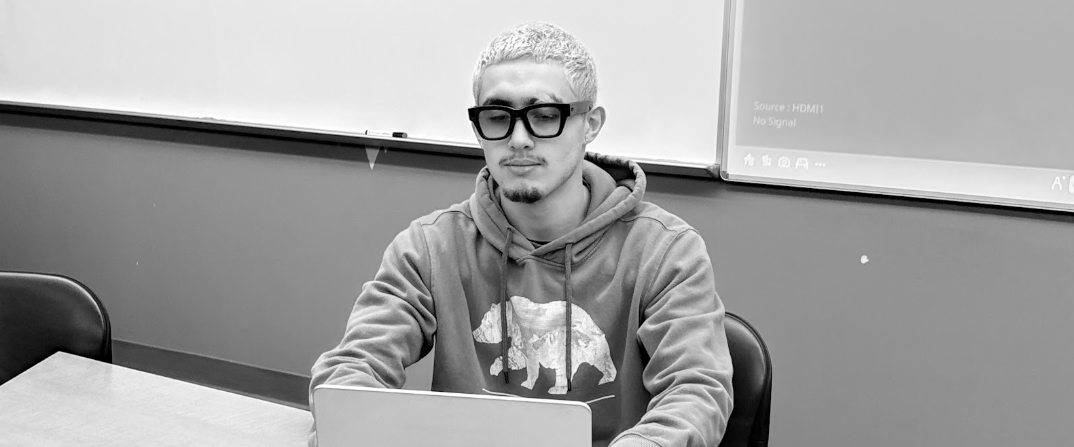
Student journalists for The Commuter work on the upcoming publication on Oct. 19. (Bel Dominesey/The Commuter)
FREDERICK, MD— While student reporters in neighboring states face intense administrative censorship, the staff at The Commuter, Frederick Community College’s student newspaper, answers to no one but their readers. Because the college designates the paper as a public forum, outside administrators are legally banned from killing or altering stories.
These local protections stem directly from the Maryland New Voices Act, a state law shielding student reporters from institutional censorship. The legislation makes it illegal for administrators to pressure faculty advisors into modifying news coverage to protect the college’s public image. Backed by these legal guards, FCC reporters openly investigate sensitive campus controversies, budget changes, and leadership transitions.
Defying a nationwide trend of campus censorship, FCC student journalist Colin Rivera draws a hard line for student speech.”I have always held the opinion that expression is free,” said Rivera, “Knowing that anyone’s opinions or views on things are becoming censored is unacceptable.”
This defense of free expression mirrors a high-stakes battle unfolding at the highest levels of government. On Sept. 24, 2026, a federal judge ordered the White House to give back press passes to reporters from CNN, MSNBC, Politico, and the Associated Press. The administration had cut off their access after complaining about bad press, claiming that leaders get to choose which reporters are allowed to cover the government.
The Student Press Law Center, a legal organization devoted exclusively to defending and advancing the free press rights of student journalists, warns that when this mindset takes hold at the top, it slides down to college campuses. Administrators feel empowered to clean up the news, hide public records, and alter student stories to protect the school’s reputation.
This national battle shows exactly why local rules matter so much to the reporters on the ground. “Seeing those national headlines makes you realize how important local protections really are,” said Kathlin Bruce, a second-year student at FCC and the editor in chief for The Commuter. “Having things like prior restraint bans at FCC gives us the freedom to chase down hard stories without looking over our shoulders.” When student writers know they are legally safe, they start doing real, independent reporting.
But student journalists in nearby states face tighter restrictions and a tougher reality. In Virginia, there is no New Voices law. This leaves student newspapers exposed to censorship. Because of a 1988 Supreme Court case called Hazelwood v. Kuhlmeier, school officials in unprotected states wield massive legal authority to censor student media if they claim it serves a legitimate educational purpose. Armed with this legal precedent, hostile administrations across the country subject student newsrooms to severe institutional pressure. Advisors could be fired for refusing to censor their writers, student government funds might be suddenly cut off, and administrators could force students to hand over sensitive stories about campus safety before publication.
While big media companies have legal teams to fight federal bans, local policies at schools like FCC are the real starting line. They ensure the next generation of reporters learns how to stand up for the truth rather than give in to pressure before they even enter the professional workforce.
For the staff at The Commuter, these protections do more than just keep a newspaper running. They give students a chance to learn how to hold powerful people accountable without being told what they can and cannot say. Those are skills student journalists will use long after graduation.